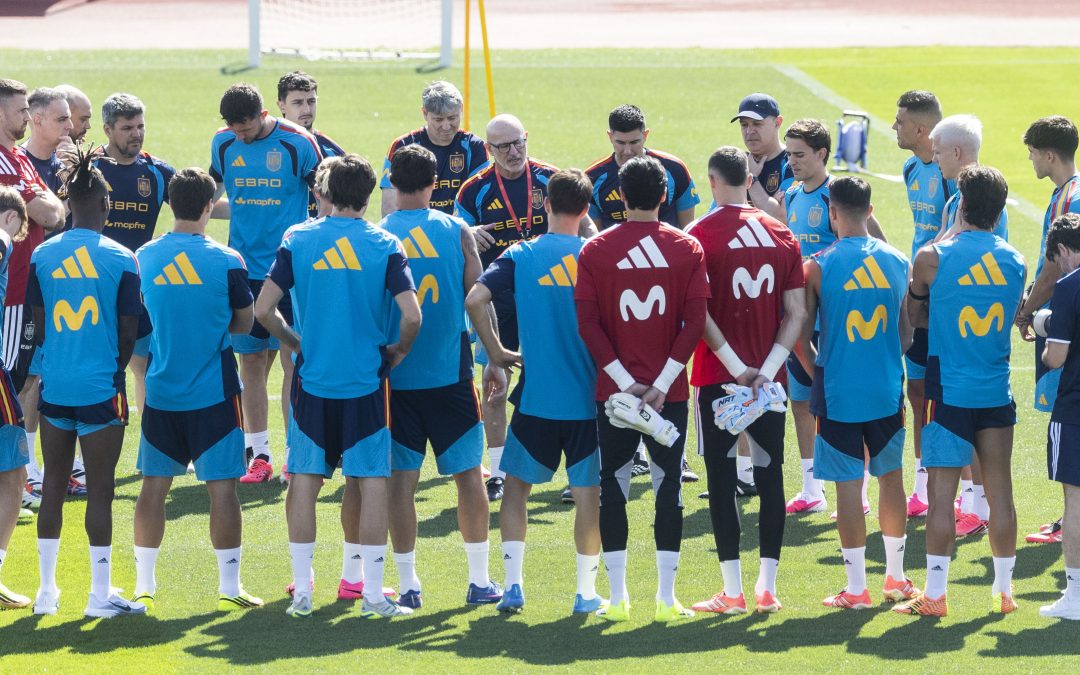
Spain’s 2026 FIFA World Cup victory was more than another international title. It was a clear example of how Spanish football has evolved.
The principles that have defined Spanish football for decades — technical quality, possession, intelligent movement and collective play — remain at the heart of the national team. But the 2026 champions have added new dimensions: verticality, pressing, tactical flexibility, individual creativity and faster decision-making.
For young international footballers, this evolution offers an important lesson.
Spanish football is not simply about passing the ball. It is about understanding the game.
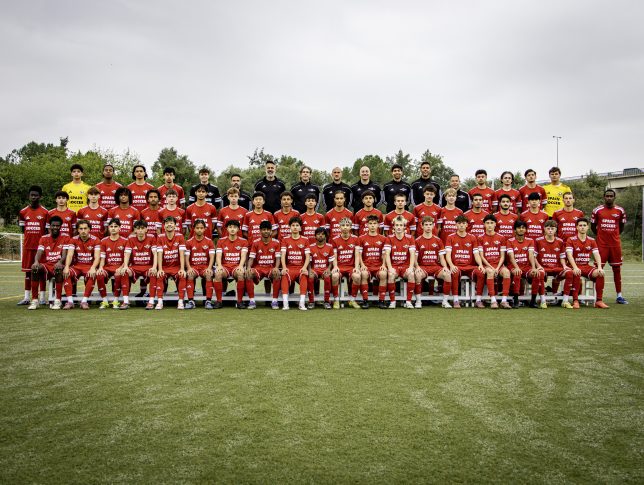
And this is one of the fundamental principles behind player development at Spain Soccer Academy in Seville.
1. Understanding the Game Comes First
One of the defining characteristics of Spanish football development is the importance placed on game intelligence.
Players are encouraged to understand what is happening around them before making a decision.
Where is the space?
Where is the opponent?
Where can the next pass be played?
Should I maintain possession or play forward?
Should I move inside or create width?
Should I press immediately after losing the ball?
These decisions are what transform technical ability into football intelligence.
The Spanish model therefore aims to develop players who are capable of solving problems on the pitch, rather than simply following predetermined instructions.
This philosophy is closely connected with the development approach at Spain Soccer Academy, where tactical understanding and decision-making form an important part of the training process.
2. Possession With a Purpose
Spain’s traditional identity is strongly associated with possession football.
However, the 2026 World Cup demonstrated that modern Spanish football is not about keeping the ball simply for the sake of keeping it.
Possession is a tool for controlling the game.
It allows a team to:
- Control the tempo.
- Move the opposition.
- Create spaces.
- Reduce the opponent’s opportunities.
- Prepare attacking situations.
- Protect the team after losing the ball.
The key question for a developing footballer should therefore not be:
“Can I keep possession?”
but:
“What can my team achieve by keeping possession?”
This difference is fundamental.
3. Verticality and Attacking Space
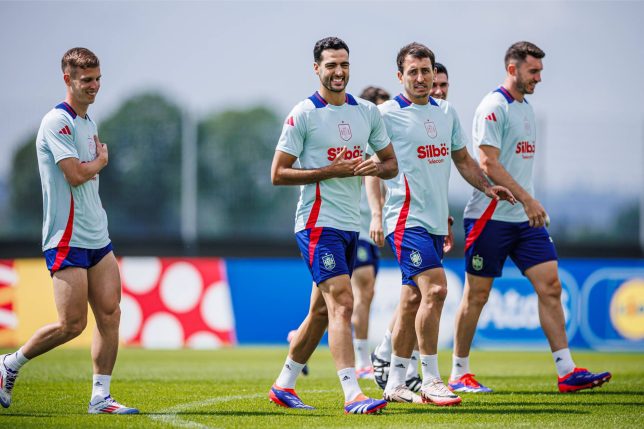
The Spanish national team has also evolved beyond the stereotype of slow possession.
The 2026 team demonstrated that possession and vertical football can coexist.
When space appeared, Spain could accelerate immediately.
Wide players provided width and one-versus-one ability, while midfielders looked for opportunities to progress the ball through or around the opposition.
This creates an important tactical relationship:
Movement creates space. Space creates options. Options create decisions.
For young players, this means learning not only how to receive the ball, but also how to create space for themselves and their teammates.
Movement without the ball is part of football intelligence.
4. Pressing Begins When Possession Is Lost
Another important characteristic of modern Spanish football is the reaction immediately after losing possession.
Instead of simply retreating, Spain often tries to recover the ball quickly.
This requires:
- Immediate reaction.
- Compact distances between players.
- Coordination between lines.
- Pressure on the ball.
- Protection of central areas.
- Collective responsibility.
The transition from attack to defence therefore becomes an important part of the team’s identity.
This is another valuable lesson for young footballers:
Defending does not begin when the opponent reaches your penalty area. It begins the moment your team loses the ball.
5. Individual Talent Serves the Team
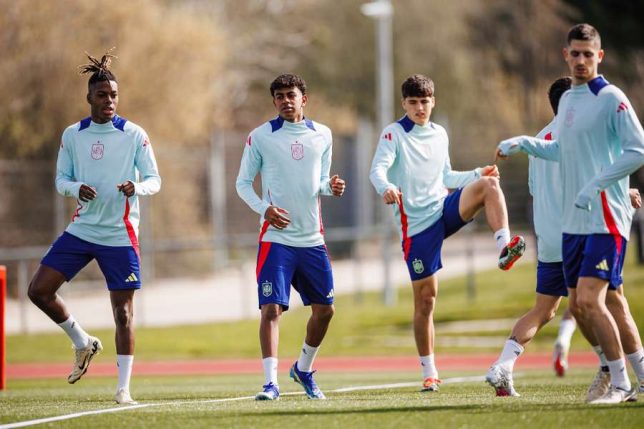
Spain has always produced technically gifted players.
But the philosophy of the national team places individual talent within a collective structure.
The message is simple:
The team comes first.
A talented player must learn how to make his qualities useful to the team.
Sometimes that means taking responsibility and attacking a defender.
Sometimes it means making a run to create space for another player.
Sometimes it means pressing.
Sometimes it means keeping possession.
Sometimes the most important action is one that never appears in the statistics.
This collective mentality is one of the characteristics that makes the Spanish football environment particularly valuable for developing international players.
6. Adaptability Is Part of the Modern Spanish Game
Perhaps one of the most important lessons from Spain’s 2026 World Cup campaign is that having an identity does not mean playing exactly the same way in every situation.
Different opponents require different solutions.
Spain can dominate possession against a deep defensive block.
It can play through pressure.
It can attack the wings.
It can accelerate vertically.
It can press high.
It can manage the rhythm of a match.
The principles remain consistent, but the solutions change.
This is the difference between learning a formation and learning football.
A formation can be written on a tactics board.
Football cannot.
Players must constantly interpret changing spaces, opponents and situations.
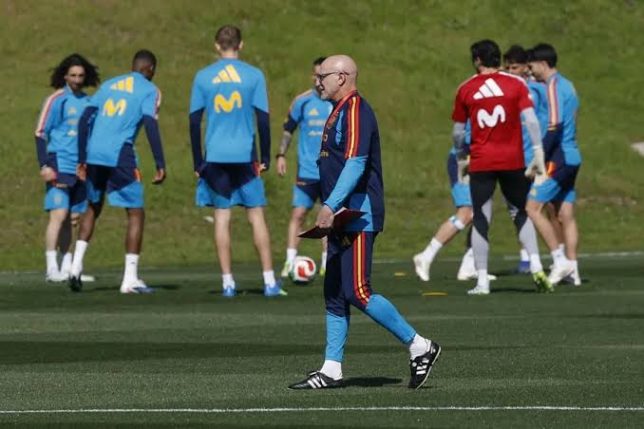
The Connection With Spain Soccer Academy
These principles are closely connected with the philosophy of Spain Soccer Academy in Seville.
SSA’s approach is based on the idea that developing a footballer requires more than technical training.
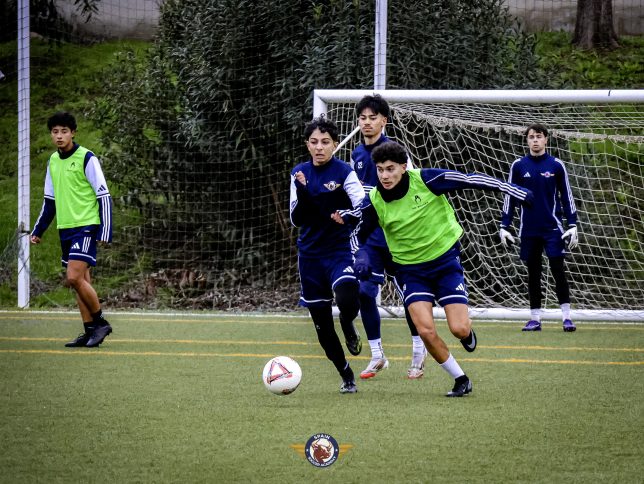
Players need to understand the Spanish football model, compete in real Spanish football environments and learn to make decisions under pressure.
Training is combined with competition, tactical development, physical preparation, video analysis and individual player support.
The objective is not simply to create technically better players.
It is to develop more intelligent, adaptable and complete footballers.
This is particularly important for international players coming to Spain.
They are exposed to a football culture where the player is constantly encouraged to ask:
Why?
Why am I positioned here?
Why should I play forward?
Why should I move?
Why should we press?
Why should we keep possession?
Understanding these questions is what allows players to transfer what they learn in training into competitive matches.
What Can Young Players Learn From Spain?
Spain’s 2026 World Cup victory provides a clear message for the next generation of footballers.
Technical ability remains essential.
But technical ability alone is not enough.
Modern football requires:
Technical quality + tactical intelligence + decision-making + physical preparation + adaptability + collective responsibility.
The Spanish model has evolved, but its fundamental principle remains the same:
Develop players who understand the game.
At Spain Soccer Academy, this philosophy is at the centre of our approach to international player development.
Because becoming a better footballer is not simply about learning what to do.
It is about understanding why you do it.
Train. Understand. Compete. Develop.
That is the Spanish way of football development.