
If you are a young football player dreaming of improving your game, competing at a higher level and experiencing football in a completely different environment, Spain is a country you should seriously consider.
Spain is not only home to some of the most successful football clubs in the world. It is also a country where football is part of everyday life, from professional academies to local clubs and youth competitions.
But what actually makes Spain such an interesting place for player development?
It is not simply about training more. It is about how you train, who you train with, what you learn during matches and how you understand the game.
For international players, spending a season in Spain can be an opportunity to step outside their usual football environment, experience a different style of play and challenge themselves both on and off the pitch.

Why is Spain so important in football development?
Spanish football has built a strong reputation for developing technically gifted and tactically intelligent players.
Over the years, the country has produced players who have competed at the highest level, but the most interesting part is not the names themselves. It is the football culture and the training environment behind them.
From a young age, players are encouraged to do more than simply run, pass or shoot.
They are taught to understand why they are doing something.
Where should you move?
When should you pass?
How can you create space?
What is happening around you before you receive the ball?
What should you do when your team loses possession?
These questions are a big part of modern football development.
And they are some of the reasons why Spanish football places so much importance on technical ability, decision-making and understanding the game.
Technical ability is only the beginning
When people talk about Spanish football, they often immediately think about passing and possession.
There is some truth to that, but Spanish football is much more than keeping the ball. A player needs to know how to use their technical ability in real situations.
A perfect pass during an isolated training exercise is one thing. Making the right pass when an opponent is pressing you, a teammate is making a run and you only have a second to decide is something completely different.
This is where training and competition need to work together.Players need opportunities to practise their technique, but they also need opportunities to use it under pressure.
That is one of the most important principles behind meaningful player development.
Tactical intelligence matters
A good football player does not only know what to do with the ball. They also understand what is happening around them.
This is often described as football intelligence or tactical intelligence. It includes things such as:
- Scanning before receiving the ball
- Understanding space
- Recognising pressure
- Finding passing options
- Timing movements
- Positioning yourself correctly
- Understanding when to accelerate the play
- Knowing when to keep possession
- Reacting quickly when possession changes
These abilities develop through repetition, coaching and, perhaps most importantly, real football situations.
The more situations a player experiences, the more opportunities they have to learn from them.

Why competitive matches are so important
Training is essential. But football is ultimately played in matches.
This is why competitive football should be an important part of any serious player development programme.
A training exercise can prepare you for a situation. A match forces you to solve it.
You have opponents trying to stop you.
You have teammates making decisions.
You have limited time and space.
You make mistakes.
You have to react.
You have to adapt.
And sometimes, you have to find a solution that you have never practised before.
For an international player arriving in Spain, competing against Spanish opposition can be one of the most valuable parts of the experience.
It allows players to test themselves against different styles, different levels of intensity and different tactical situations.
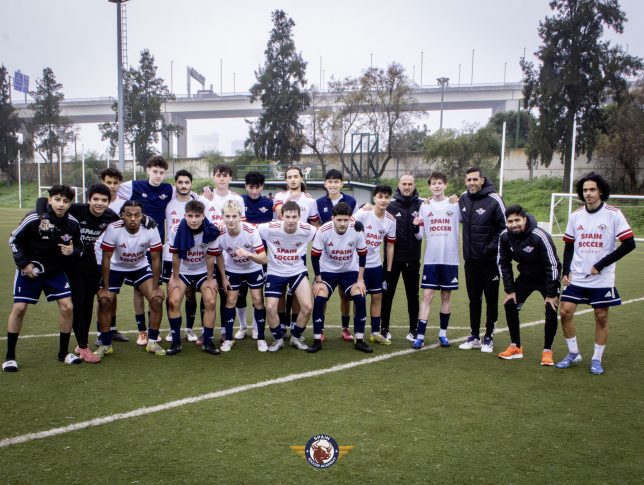
At Spain Soccer Academy, competition is an important part of the development process. Our players have the opportunity to train throughout the week and then put those ideas into practice during competitive matches.
That connection between training and competition is fundamental.
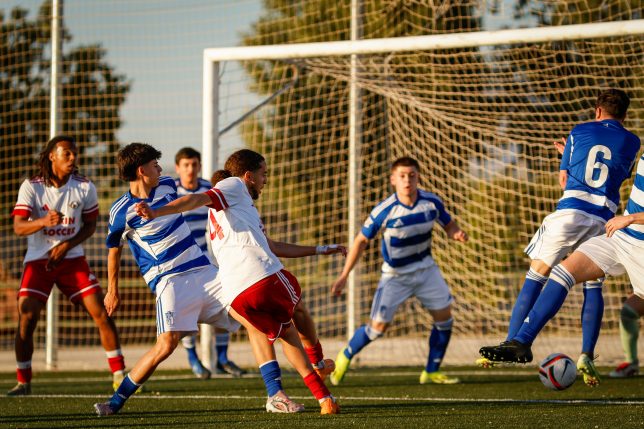
Granada, 26 de Marzo de 2026. Partido de futbol entre Granada CF – U19 vs Spain Soccer Academy en Fuente Vaqueros. ©Francisco Neyra / ©A360 Comunicacion
Playing against Spanish clubs can change the way you see the game
One of the biggest advantages of developing in Spain is the opportunity to experience Spanish football from the inside.
It is very different from watching LaLiga on television. When you are actually on the pitch, you feel the speed of the game.
You experience the pressure. You have to make decisions. You see how opponents move. You learn how quickly you need to react. And you discover areas of your game that may need improvement.
For an international player, this can be a valuable reality check.
Maybe you are technically very good but need to improve your decision-making.
Maybe you are physically strong but need to understand positioning better.
Maybe you are comfortable when you have time on the ball but struggle when opponents press aggressively.
These experiences are not failures. They are opportunities to learn. That is what competition should provide.
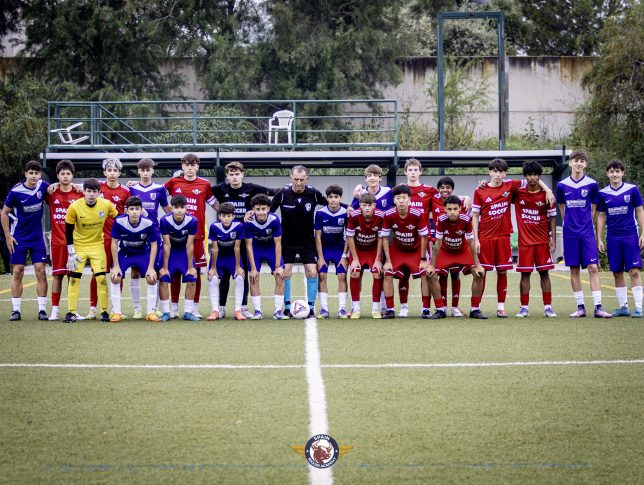
Spain offers more than football training
Another reason international players choose Spain is that development does not happen only during training sessions.
Moving to another country changes your daily routine.
You meet people from different cultures.
You hear another language.
You become more independent.
You have to adapt to a new environment.
You discover a different football culture.
All of this can contribute to personal development.
For young international players, that experience can be just as important as what happens on the training pitch.
At Spain Soccer Academy, our international players live this experience in Seville while combining football with education, Spanish language learning and everyday life in the city.
The objective is not simply to spend a few months training in Spain.
It is to experience what it means to live football in Spain.

Why Seville?
There is another important part of the equation: the city itself.
Seville has a strong football culture and two historic professional clubs, Sevilla FC and Real Betis.
Football is visible throughout the city, from professional stadiums to grassroots clubs and local pitches.
For an international player, this creates an environment where football does not feel like an isolated activity.
It becomes part of everyday life.
At the same time, Seville offers an international environment, universities, schools, cultural activities and a lifestyle that can make the transition easier for young players coming from abroad.
For someone spending a season away from home, where you live matters.
The football matters. But so does the environment around it.

What should an international player look for in a Spanish football academy?
Choosing a football academy is an important decision, and the biggest name is not necessarily the best option for every player.
Before making a decision, look beyond the number of training sessions.
Ask questions such as:
Who are the coaches?
Do they have real football experience and a clear methodology?
How often do players compete?
Training without enough match experience can limit development.
What level are the opponents?
Playing against different types of opposition can challenge players in different ways.
How is player development monitored?
A good programme should know what each player needs to improve.
What happens outside the pitch?
For international players, accommodation, education, language and personal support are also important.
What is the environment like?
The right football academy should challenge you while also giving you the support you need to adapt.
How Spain Soccer Academy approaches player development
At Spain Soccer Academy, we believe that developing a football player is about much more than improving individual skills.
Our approach combines training, competition, education and life experience.
Players train with experienced coaches, compete in Spanish football and learn to adapt to a new football environment.
The goal is to help players understand the game better, make better decisions and become more complete footballers.
And that process is different for every player.
A 16-year-old arriving from the United States may have different needs from an 18-year-old coming from Europe or Africa.
Some players need to improve their tactical understanding.
Others need to adapt to the speed of play.
Others need more confidence, consistency or experience in competitive matches.
Player development is not a straight line.
There are good days, difficult days, mistakes, improvements and moments when things finally start to click.
That is part of football.
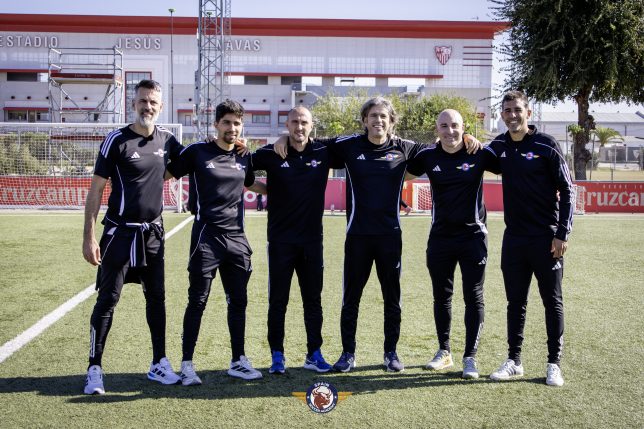
Spain can challenge you — and that is exactly the point
Perhaps one of the most valuable things about developing in Spain is that you are constantly exposed to new challenges.
You may have to play faster.
Think earlier.
Move differently.
Defend better.
Understand space.
Compete against stronger opponents.
Adapt to teammates you have never played with before.
For some players, that can be uncomfortable at first.
But growth rarely happens by staying inside your comfort zone.
The objective is not to arrive in Spain and suddenly become a different player.
The objective is to leave Spain as a more complete, more intelligent and more experienced footballer.
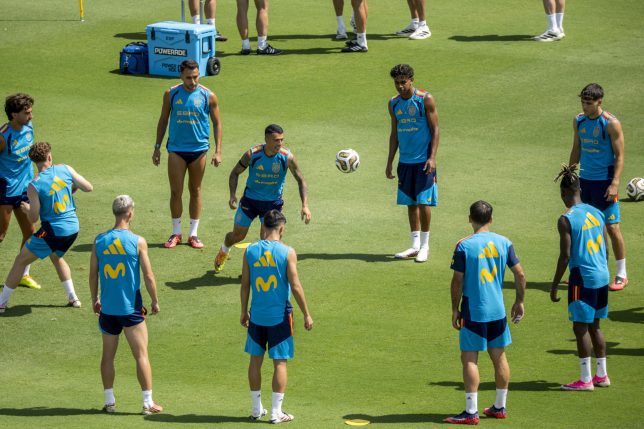
Los jugadores de la selección española durante el entrenamiento en el Estadio Cotton Bowl en Dallas, EFE/Lavandeira jr
Is Spain the right place for your football development?
There is no single country or football academy that is perfect for every player.
Your decision should depend on your age, football level, objectives, academic plans and the type of environment in which you develop best.
But if you are looking for a country where football culture, technical development, tactical education and competitive football come together, Spain deserves serious consideration.
For international players, it can be much more than a football experience.
It can be a chance to challenge yourself, discover a new culture, become more independent and see the game from a different perspective.
And sometimes, changing your football environment is exactly what you need to take the next step.
Discover football development in Spain with Spain Soccer Academy
At Spain Soccer Academy, international players have the opportunity to train, compete, study and live in Seville while experiencing Spanish football from inside the game.
If you want to discover what a season at SSA could look like for you, explore our programme and find out how the experience works.
Your next football chapter could start in Spain.

business hand clicking FAQ or Frequently asked questions button on search toolbar
Frequently Asked Questions
Why is Spain good for football development?
Spain combines a strong football culture with technical and tactical training and a highly competitive football environment. Players can develop their decision-making, game understanding and technical abilities through both training and competitive matches.
Is Spain good for international football players?
Yes. Spain has a long tradition of welcoming international players, and there are football academies designed specifically to help young players adapt to Spanish football while also providing education, accommodation and support.
How can I train in Spain as an international player?
International players can apply to football academies that offer programmes for overseas players. Requirements vary depending on the academy, age and programme, so it is important to contact the academy directly and understand the application process.
What is a Spanish football academy?
A Spanish football academy is an organisation that provides structured football training and player development. Depending on the programme, it may also include competitive matches, education, accommodation, language learning and additional player support.
Is playing matches important for football development?
Yes. Training helps players develop technical, tactical and physical abilities, while competitive matches allow them to apply those abilities under real pressure. The combination of training and competition is an important part of long-term player development.
Can international players study while playing football in Spain?
Yes. Some football academy programmes combine football training with academic education. The available options depend on the academy and the player’s individual circumstances.